Summary
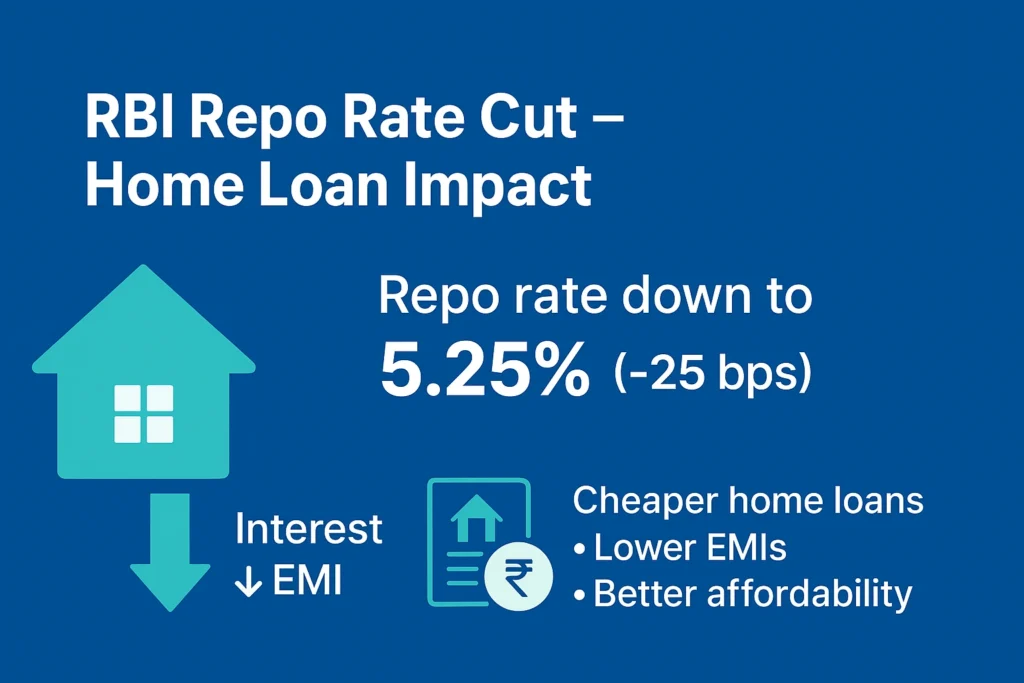
On 5 December 2025 the Reserve Bank of India (RBI) lowered its policy repo rate by 25 basis points to 5.25 percent. This move is expected to make home loans cheaper for many borrowers and ease monthly EMI burdens for those with floating or benchmark-linked loans.
🔑 What Changed and Why It Matters
The repo rate is the rate at which RBI lends to banks. When this rate comes down it reduces the cost for banks to borrow funds. Banks often respond by reducing their lending rates especially for loans tied to external benchmarks. For home-loan borrowers with such loans this translates into immediate EMI reductions or shorter loan tenures.
With inflation under control and economic growth steady, RBI deemed this the right moment to ease rates and support borrowers. The rate cut comes at a time when many Indians are planning new homes or looking to refinance existing loans.
📉 How Much You Stand to Save Real EMI Examples
These examples use common home-loan amounts and standard tenures to show potential savings after rate cut. They assume banks transmit the full benefit immediately actual savings depend on each lender’s revised interest rate schedule.
Real EMI Examples After RBI Cut Example scenario Old rate 8.50% → New rate 8.25%
Principal ₹25,00,000 Home Loan (₹25 lacs)
| Tenure years | EMI before | EMI after | Monthly saving | Approx annual saving |
|---|---|---|---|---|
| 10 | ₹30,996 | ₹30,663 | ₹333 | ₹3,999 |
| 15 | ₹24,618 | ₹24,254 | ₹365 | ₹4,380 |
| 20 | ₹21,696 | ₹21,302 | ₹394 | ₹4,727 |
| 25 | ₹20,131 | ₹19,711 | ₹419 | ₹5,033 |
| 30 | ₹19,223 | ₹18,782 | ₹441 | ₹5,294 |
Principal ₹30,00,000 Home Loan (₹30 lacs)
| Tenure years | EMI before | EMI after | Monthly saving | Approx annual saving |
|---|---|---|---|---|
| 10 | ₹37,196 | ₹36,796 | ₹400 | ₹4,799 |
| 15 | ₹29,542 | ₹29,104 | ₹438 | ₹5,256 |
| 20 | ₹26,035 | ₹25,562 | ₹473 | ₹5,673 |
| 25 | ₹24,157 | ₹23,654 | ₹503 | ₹6,040 |
| 30 | ₹23,067 | ₹22,538 | ₹529 | ₹6,353 |
Principal ₹40,00,000 Home Loan (₹40 lacs)
| Tenure years | EMI before | EMI after | Monthly saving | Approx annual saving |
|---|---|---|---|---|
| 10 | ₹49,594 | ₹49,061 | ₹533 | ₹6,399 |
| 15 | ₹39,390 | ₹38,806 | ₹584 | ₹7,008 |
| 20 | ₹34,713 | ₹34,083 | ₹630 | ₹7,564 |
| 25 | ₹32,209 | ₹31,538 | ₹671 | ₹8,053 |
| 30 | ₹30,757 | ₹30,051 | ₹706 | ₹8,471 |
Principal ₹50,00,000 Home Loan (₹50 lacs)
| Tenure years | EMI before | EMI after | Monthly saving | Approx annual saving |
|---|---|---|---|---|
| 10 | ₹61,993 | ₹61,326 | ₹667 | ₹7,998 |
| 15 | ₹49,237 | ₹48,507 | ₹730 | ₹8,760 |
| 20 | ₹43,391 | ₹42,603 | ₹788 | ₹9,455 |
| 25 | ₹40,262 | ₹39,422 | ₹840 | ₹10,079 |
| 30 | ₹38,446 | ₹37,563 | ₹882 | ₹10,588 |
Principal ₹60,00,000 Home Loan (₹60 lacs)
| Tenure years | EMI before | EMI after | Monthly saving | Approx annual saving |
|---|---|---|---|---|
| 10 | ₹74,391 | ₹73,592 | ₹800 | ₹9,598 |
| 15 | ₹59,084 | ₹58,208 | ₹876 | ₹10,511 |
| 20 | ₹52,069 | ₹51,124 | ₹945 | ₹11,345 |
| 25 | ₹48,314 | ₹47,307 | ₹1,007 | ₹12,079 |
| 30 | ₹46,135 | ₹45,076 | ₹1,059 | ₹12,706 |
Principal ₹75,00,000 Home Loan (₹75 lacs)
| Tenure years | EMI before | EMI after | Monthly saving | Approx annual saving |
|---|---|---|---|---|
| 10 | ₹92,989 | ₹91,989 | ₹1,000 | ₹11,998 |
| 15 | ₹73,855 | ₹72,761 | ₹1,095 | ₹13,139 |
| 20 | ₹65,087 | ₹63,905 | ₹1,182 | ₹14,182 |
| 25 | ₹60,392 | ₹59,134 | ₹1,258 | ₹15,099 |
| 30 | ₹57,669 | ₹56,345 | ₹1,324 | ₹15,882 |
Principal ₹1,00,00,000 (₹1 crore) Home Loan
| Tenure years | EMI before | EMI after | Monthly saving | Approx annual saving |
|---|---|---|---|---|
| 10 | ₹1,239,857 | ₹1,226,526 | ₹13,331 | ₹159,968 |
| 15 | ₹984,740 | ₹970,140 | ₹14,599 | ₹175,190 |
| 20 | ₹867,823 | ₹852,066 | ₹15,758 | ₹189,091 |
| 25 | ₹805,227 | ₹788,450 | ₹16,777 | ₹201,323 |
| 30 | ₹768,913 | ₹751,267 | ₹17,647 | ₹211,763 |
For many families this drop can cover a substantial part of monthly expenses or be redirected towards investments or children’s education.
Also Read : 30 lakh Home Loan EMI
🏡 What This Means for Home Buyers and Homeowners
For New Buyers
If you are planning to take a home loan this winter you may benefit from lower interest rates and more affordable EMIs. This might make previously unfeasible home budgets viable especially for mid-range and affordable homes.
For Existing Borrowers
If your loan is on a floating or benchmark-linked rate, contact your bank to confirm when the new rate applies. Once applied you can choose to:
- Reduce your EMI and save monthly cash flow
- Keep EMI same and shorten loan tenure a good option if you aim for early loan repayment
Also Read : RBI Repo Rate Cut 2025 Shocks India Relief for Borrowers What It Means for You
For Real Estate Market
Lower borrowing cost can stimulate housing demand and help revive segments that were sluggish due to high interest rates. This can benefit developers and potential buyers alike.
⚠️ Things to Watch Out For
- Not all loans get immediate benefit Fixed-rate loans or older MCLR-linked loans may not see change.
- Banks may delay the transmission of rate cut Understand the bank’s new lending rate and timelines before expecting savings.
- Savings on fixed-income returns If you rely on fixed deposits for income you might see interest rates on FDs fall as banks pass rate cut effects to deposit rates.
Also Read : Laura Wolvaardt Net Worth 2025 Revealed How Much the South Africa Captain Earns
🧠 Editor’s Insight
This repo rate cut has potential to transform home-loan affordability for millions of Indians. For many it offers a new chance to own a home or ease monthly financial burden. But savings are not automatic borrowers must act: contact lenders, recheck loan terms, and possibly refinance or renegotiate.
This could be a turning point for India’s housing-finance climate. With lower interest rates borrowers gain, real-estate demand may rise, and the economy might get a fresh boost. With rising home prices and inflation pressures still present globally the timing seems well chosen — but vigilance remains key.
Also Read : How to Build a Corpus of 1 Crore
Source & Attribution
Based on the official RBI Monetary Policy announcement of 5 December 2025 and verified financial news reports across leading outlets.
Practical Reader Takeaways and Action Steps
- Check your loan agreement Is your loan linked to an external benchmark such as repo linked lending rate or MCLR If yes you likely benefit quickly.
- Contact your lender Ask when they will implement the new rate and request a statement showing new EMI or revised outstanding schedule.
- Choose what benefits you Want lower EMI to free monthly cash flow or same EMI and shorter tenure to save interest and become debt free sooner. Use the tables above to guide your choice.
- Recalculate if your bank passes partial transmission If the bank passes only part of the cut multiply the monthly saving proportionally
- Revisit emergency fund and investments If you save the EMI difference invest some part in an emergency fund or high quality debt instruments to benefit from lower market yields
Common Questions Answered
Q How long will banks take to change my EMI after RBI cuts the repo rate
A Transmission varies Some banks pass changes within a few weeks others may take one to three months Check your lender for exact timeline
Q Will fixed rate home loans benefit
A No fixed rate loans remain unchanged until their reset clause or rollover date. Only floating rate or benchmark linked loans show immediate effect
Q Should I prepay or reduce tenure
A If you can afford current EMI consider keeping EMI same and reducing tenure This saves more interest over time If you need monthly relief choose lower EMI
Q Does rate cut change my insurance or taxes
A No direct effect on insurance premiums or tax rules But lower EMI frees cash that can be used for investments or tax planning
Disclaimer
This is a summary of publicly available financial information for educational purposes. EveningHeadline.com does not claim ownership of any external data and links back to official sources where applicable. Home loan rates and EMI calculations may vary across banks and are subject to change as per RBI notifications. Readers should verify final rates and terms directly with lenders before making financial decisions.

I run Evening Headlines where I share quick and complete news updates so readers can stay informed without wasting time. I work as a cost accountant but I also follow cricket, the economy, investments, movies, and social causes. I enjoy turning big stories into short, clear summaries that anyone can understand. I also create content on my other sites like Wealth Vartalap, Christmas Time Clock, Cashplanter, and Abhishek Listing. My goal is simple make news easy to follow and worth reading every day.