Summary
On 21 November 2025, India implemented four consolidated Labour Codes, replacing 29 older labour laws. These new laws are designed to simplify rules, expand social security coverage (even for gig workers), enforce appointment letters, and modernize workplace safety and relations.
Key Highlights
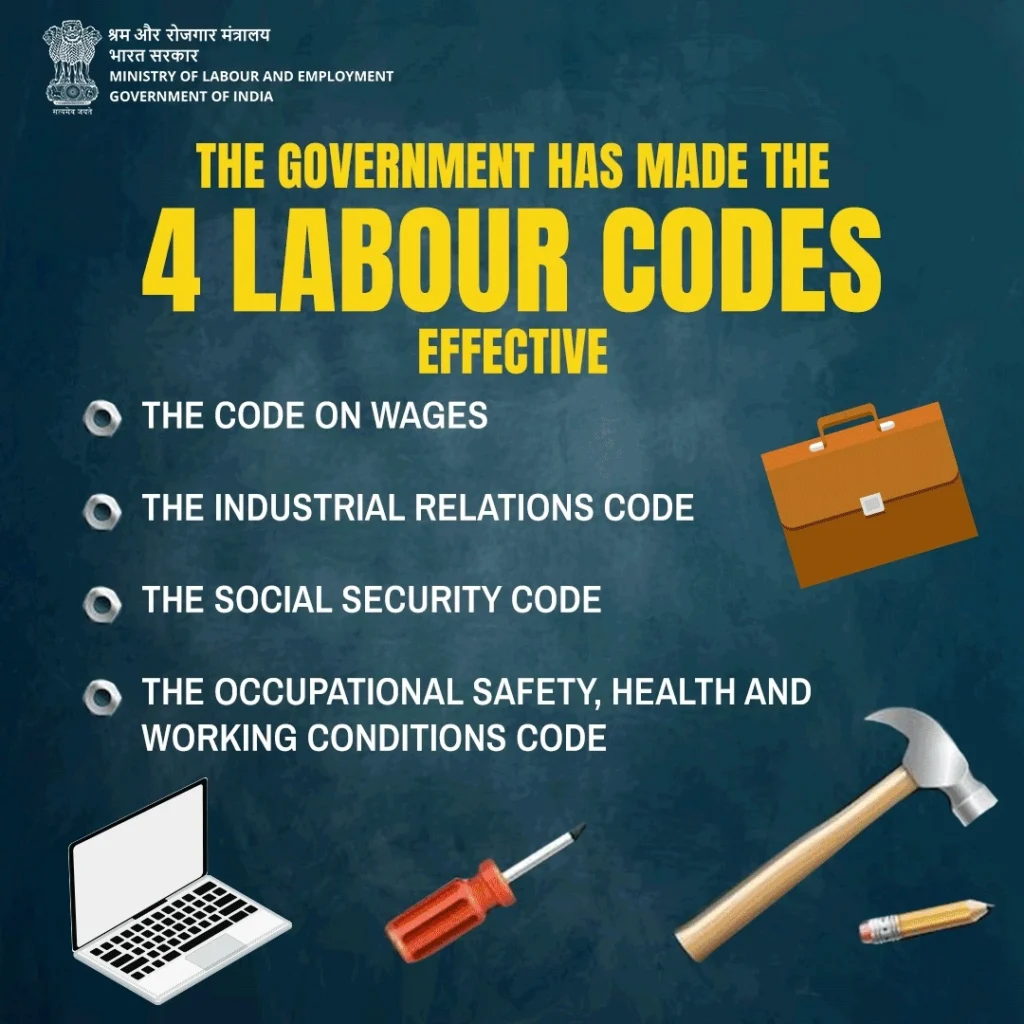
- The four new labour laws that came into force are: the Code on Wages (2019), Industrial Relations Code (2020), Code on Social Security (2020), and the Occupational Safety, Health and Working Conditions Code (2020).
- These codes together replace 29 central labour laws, many of which dated back to pre- and early post-Independence era.
- Under the new Code on Wages, minimum wages are now mandated more broadly.
- Employers must now issue written appointment letters to all workers, clarifying their roles, pay, and entitlements.
- Social security benefits are extended to many more categories: gig workers, platform workers, and unorganised-sector employees now have formal coverage.
- Fixed-term employees (contractual workers) now become eligible for gratuity after one year of service.
- There are new provisions for workplace safety and health: national standards, mandatory medical checkups, and safer working conditions.
- Working hours can now stretch from 8 to 12 hours a day, but must not exceed 48 hours in a week, with overtime paid at double the regular rate.
- For women workers, the codes allow night shifts with safety measures. Equal pay for equal work is emphasized, and maternity benefits are expanded.
- Compliance has been simplified: there is a single registration, single licence, and single electronic return system for establishments.
- The inspection system is changed the traditional labour inspector role is being reformed into an inspector-cum-facilitator model to encourage guidance rather than punishment.
- The definition of “employee” or “worker” under the new codes is broader, covering gig workers, platform workers, and inter-state migrant workers.
Also Read: Ritika Nayak Rising Telugu Star From Delhi Making Waves With Mirai
Editor’s Insights
This reform is game-changing. For decades, India’s labour laws were fragmented, overlapping, and often outdated. By bringing all that into four clear codes, the government has shown it is serious about modernizing work rules for a 21st-century economy.
For workers, especially those in informal or gig jobs, this could mean real protection. Written appointment letters, social security, and a formal definition of “worker” means that many who were previously excluded may now finally be covered.
But there are also valid concerns. Trade unions have criticized some provisions, such as easier lay-off thresholds and longer working hours. The balance between flexibility for employers and protection for workers will be key to watch.
Governments at the state level now have a big job. Though the codes are central, state governments must notify their own rules. Ministry of Labour & Employment In places where states are slow or hesitant, full implementation may take time.
This reform could shape the future of work in India: how safe workplaces are, how secure gig and platform workers feel, and how formalised the entire workforce becomes.
Source & Attribution
This article is based on reports from the Ministry of Labour & Employment and India Today ,along with commentary from experts and industry on the implications of the new labour codes.
📢The Government has made the four Labour Codes effective! India’s Labour Codes mark a major reform by modernizing labour laws, ensuring decent working conditions, fair wages, and long-term protection for workers across all sectors⬇️
— PIB India (@PIB_India) November 21, 2025
(1/3)#ShramevJayate pic.twitter.com/GTFBf8Hgp8
Disclaimer
This article summarizes publicly available information on new Indian labour laws (as of November 2025). Some provisions may vary as detailed state rules are published. For legal advice or full interpretations consult official government websites or legal professionals.

I run Evening Headlines where I share quick and complete news updates so readers can stay informed without wasting time. I work as a cost accountant but I also follow cricket, the economy, investments, movies, and social causes. I enjoy turning big stories into short, clear summaries that anyone can understand. I also create content on my other sites like Wealth Vartalap, Christmas Time Clock, Cashplanter, and Abhishek Listing. My goal is simple make news easy to follow and worth reading every day.